Serving in the Peace Corps as HIV/Aids advisers. All entries and stories are of our experience from our village in our part of Botswana. For no reason should this be taken as a generalization for the continent of Africa. Our stories and experiences are hand selected for their interest and humor to show the highlights of our service. In no way shape or form are the opinions or ideas presented here shared by the Peace Corps. This is just a married couple talking their walk.
Saturday, April 24, 2010
Dread Locks
You ever had them? You ever wanted them? I had been curious about them for some time before I got to Africa. My curiosity was less about them looking cool and more about what it would be like to have your hair in knots all the time. My experience so far has been mixed. But lets start at the beginning when my hair was long and I was about to cut it off at one point every day. I decided to try dread locks after my shadowing experience with Brent, the guy in the pictures with dreads doing my dreads. He had had them for 6 months by the time I saw him and they looked good and he said they were done by a friend. So I told him I would have them one day. On January 5th 2010 I had my hair dreaded by Brent and Katie under the influence of a cocktail and a pain killer. You wouldn’t believe how much that backcombing hurts. The first night was separating my hair into 60 some odd pony tails and early the next morning the dreading started. It was an 8 hour+ experience with many breaks in the middle.
The short of things is that having dread locks is a lot of work with out the benifits of ever running your fingers through your hair. But they do look and feel cool. It's one of those experiences I've always wanted to try and now I have. But I did get to dread the hair of another voluteer. She had long hair and after having mine I took a lot of pride in making hers good.


Hitch Hiking
Salajwe village rests 60K from the nearest tarred road deep in the Kalahari desert bush. From the end of the tarred road there is only one small village and several cattle posts on the gravel road before we get to Salajwe. This unique geographical location demands a hitch hiking adventure both to and from our house each time. And yes, every tine is a new adventure.

A little background on the ropes of ‘Hiking’ in Botswana and most of Africa. First off, there is no thumb in the air, what is done is an out stretched arm palm down with a limp wrist that flaps like you’re petting an invisible dog on the head. If you’re going far, you flap, the swing the hand up next to your head while bending at the elbow like you’re showing off the back of your hand. If the driver waves his hand in front of his face like he’s brushing the tip of his nose back and forth, that means no room, he doesn’t want, or he’s not going where you’re going. They flash their lights to show this too.
When it comes to who gets the ride when a vehicle stops is no holds bar some times. Anything goes, the more aggressive and faster the better. We’ve been pushed, elbowed or jostled each time. It matters little who got there first or waited the longest or even if you were the one who flagged down the ride. However, I have been invited to ride in side when I was wearing a tie and the passenger road in the back. It all depends on the situation.
Katie and I have a system. Most often Katie does the flagging because she’s beautiful, aggressive and just plane better at it. She’ll lay in the road if she had to. So, The flagger, Katie, gets a vehicle to stop and as she’s asking if the driver is going where we’re going I grabs the bags and throws them in, while Katie covers two good sitting spots (against the cab of the truck). This works great.
When we fist starting ’hiking’, we waited, let those who were there first get the ride, gave up good spits and were generally polite. By doing this we misses good rides, got stepped on and sat in the most uncomfortable spots. NO one else in this country shared that level of politeness when hiking, so it went to the wayside except for special circumstances. Now we run our two person attack and we almost always do the flagging and get the best spots.
Before this revelation, I had sat in grease, water and road grime, road 2 hours in the fetal position, held a perpetual dip with my arms to keep my butt from cracking against the truck bed rim. Now I bring a piece of foam to sit on to save my back a little. I’ve held babies, lost my hat and spanked a cow as we drove through the heard slowly honking. There are many more. Katie went 60K with a teachers foot pressed right against her crotch in the back of a crowded pick up. We’ve been rained on, head vehicle breakdowns and flat tires, Katie road with a butchered cow once, mine have always been alive :).
One funny thing I’ve noticed is that the white people rarely stop. Most are heading into or out of the CKGR (Central Kalahari Game Reserve) pulling trailers and driving spacious Land Cruisers. They just fly on by, I only get upset when where the only ones waiting and they have plenty of room. Who knows, would I do the same on my vacation? Who know.
A little background on the ropes of ‘Hiking’ in Botswana and most of Africa. First off, there is no thumb in the air, what is done is an out stretched arm palm down with a limp wrist that flaps like you’re petting an invisible dog on the head. If you’re going far, you flap, the swing the hand up next to your head while bending at the elbow like you’re showing off the back of your hand. If the driver waves his hand in front of his face like he’s brushing the tip of his nose back and forth, that means no room, he doesn’t want, or he’s not going where you’re going. They flash their lights to show this too.
When it comes to who gets the ride when a vehicle stops is no holds bar some times. Anything goes, the more aggressive and faster the better. We’ve been pushed, elbowed or jostled each time. It matters little who got there first or waited the longest or even if you were the one who flagged down the ride. However, I have been invited to ride in side when I was wearing a tie and the passenger road in the back. It all depends on the situation.
Katie and I have a system. Most often Katie does the flagging because she’s beautiful, aggressive and just plane better at it. She’ll lay in the road if she had to. So, The flagger, Katie, gets a vehicle to stop and as she’s asking if the driver is going where we’re going I grabs the bags and throws them in, while Katie covers two good sitting spots (against the cab of the truck). This works great.
When we fist starting ’hiking’, we waited, let those who were there first get the ride, gave up good spits and were generally polite. By doing this we misses good rides, got stepped on and sat in the most uncomfortable spots. NO one else in this country shared that level of politeness when hiking, so it went to the wayside except for special circumstances. Now we run our two person attack and we almost always do the flagging and get the best spots.
Before this revelation, I had sat in grease, water and road grime, road 2 hours in the fetal position, held a perpetual dip with my arms to keep my butt from cracking against the truck bed rim. Now I bring a piece of foam to sit on to save my back a little. I’ve held babies, lost my hat and spanked a cow as we drove through the heard slowly honking. There are many more. Katie went 60K with a teachers foot pressed right against her crotch in the back of a crowded pick up. We’ve been rained on, head vehicle breakdowns and flat tires, Katie road with a butchered cow once, mine have always been alive :).
One funny thing I’ve noticed is that the white people rarely stop. Most are heading into or out of the CKGR (Central Kalahari Game Reserve) pulling trailers and driving spacious Land Cruisers. They just fly on by, I only get upset when where the only ones waiting and they have plenty of room. Who knows, would I do the same on my vacation? Who know.
Sunday, April 4, 2010
Project Update (Katie)
Here’s a short recap of various projects I’ve completed in the past six months, to give you guys a quick glimpse into the life of a Peace Corps volunteer:
HBC and Compost

The soil in Salajwe is very sandy, which makes gardening difficult. The role of Home Base Care (HBC) at the clinic is to provide care to terminally ill patients at their homes: volunteers bathe patients, clean house, cook food. In addition to that, the clinic provides a plot to the HBC to garden and provide vegetables for the patients.
When I first arrived at Salajwe, the garden was dormant. In order to encourage the HBC volunteers to get involved in gardening again, I wrote up a list (in Setswana) of what food scraps to save at home in order to make compost. Compost is made up of wet organic material (fruit/vegetable scraps), dry organic material (hay, straw, dry leaves and grasses), and animal manure. The dormant garden had a good collection of dry organic material leftover from the winter. The HBC volunteers began bringing in their food scraps from home and even brought in boxes of goat manure (the best!) from their goat crawls. I taught the ladies how to layer the materials, keep the mound wet so that everything would decompose, and to continually add to the pile.
After a few weeks we had rich, sweet-smelling planting soil. The HBC sold peaches collected from the orchard in order to buy seeds to plant in the garden. The Salajwe Clinic now has a successful, active garden.
English Club
Some of you may know, I have started an English Club at the primary school. At the end of the school year last year (2009), many teachers and parents were concerned at the low test results of the primary school students. I attended a teachers’ meeting at the start of the new school year (2010). After reviewing test results, it appeared the majority of bad scores were due to the students’ lack of knowledge of English. I offered to teach an English Club during the students’ study hour four days a week to a group of Standard 6 and 7 students.
I started the classes off slowly to ensure that everyone would be caught up on the same page. I taught English the same way I was taught Setswana: I started off with greetings and introductions. Then I taught vocabulary for various topics such as family, professions, and verbs. I was surprised how well the Standard 6 students performed. I was a little disappointed that teachers sent me their best students to the English Club. The Standard 7 students however had lots of challenges with English.
I tried to use a variety of teaching approaches to engage the students. We played memory using common phrases in both English and Setswana, hangman, 20 questions. I do find that the more conversational English I try to engage them in, the harder the lessons are for them. I plan to keep teaching the English Club for the remainder of the school year (Nov 2010). I look forward to seeing an improvement in student scores.
Fundraiser Video Show
The community had come together to decide what to do about three deaf girls living in Salajwe. No one in the village knows sign language or how to communicate with those with hearing disabilities. So they paid for the girls to attend a workshop to learn how to mend and sew clothes so that they would be able to have some sort of a livelihood. Sewing machines were donated, and a house was started to be built so they would have a place to work. About half way through the housing project, the committee assigned to help these girls ran out of money. A committee member approached me for help. Lucas and I went to survey the house to see how much was left to be built. After deciding the materials needed were within reach, I suggested we have a video show to raise funds to finish the house.
I gave instructions to get quotes on all building materials needed so that we could estimate how much money we needed to raise. It came out to be about P1000 (~$150). We decided to charge P5/adult and P2/child. Even if only adults attended, we would need 200 people. When I announced how many people we needed to attend the video show to reach our goal, the clinic staff burst into laughter. Not really encouraging...
After determining we would show the video at the community hall, we realized the hall had no electricity. Thankfully one of the ambulance drivers at the clinic owned a generator but we needed to provide money for petrol. So all staff at the clinic donated P5 to pay for petrol. An ambulance driver from another village was willing to provide wiring for the generator and to light the community hall. We borrowed a projector from the District Health Office (DHT). A generous teacher from the primary school contributed a stereo system and DVD player for us to use. Things were coming together.
After making fliers advertising the show, we were ready to party. We set up chairs in the community hall and projected a huge screen on the wall. We thought the community members were going to be so excited. The first night we had only children but almost 50 showed up. Not the numbers we needed but we were excited nonetheless. We showed Disney’s Tarzan because of the lack of dialogue in the first 20 minutes (we weren’t sure of their English level). The first scenes of the movie are the story of the gorilla finding baby Tarzan and rescuing him from the cheetah that killed his family. Kids were screaming and cheering; it was great. By the end of the show we had made just under P100. Not very much but if we had as many or more the next night, we could make quite a dent in the fundraising.
The next night we were ready early. But the crowds were nowhere to be seen. There were a handful of children at the door. All of them were haggling us, trying to convince us to let them into the movie show for free. By the end of the night we had a whopping 8 people in the theatre. It was a huge disappointment. We thought this would be an experience that no one in Salajwe had experienced. It turned out there were three funerals in Salajwe that weekend; many adults were making preparations for those. Another huge factor was that boarder students from both the primary and secondary schools were not allowed to leave campus. So we had a limited audience.
In the end the video show was a bit of a failure. But I suppose that is part of the deal. We are making plans to have another fundraiser.
Local Enterprise Authority (LEA)
Because of the size of Salajwe, there are a limited number of jobs. The major organizations include the primary and secondary schools, the clinic, and a few general dealers. The schools are employed by teachers from outside of Salajwe (placed there by the Botswana government) as well as the clinic which is employed by nurses and counsellors from outside the village. The major general dealer is owned by an Indian family whom commute in and out of the village weekly. Very little revenue is circulated within Salajwe. The lack of job opportunities leaves the majority of Salajwe unemployed.
Right before Christmas, a handful of out of school youth were approaching me about wanting to start small businesses but didn’t know where to begin. I was made aware, by another Peace Corps volunteer, of several companies in larger villages that aid in helping to start small businesses, especially those in rural villages. I made connections with Local Enterprise Authority (LEA) to come to Salajwe and make a presentation.
Along with the leader of the Botswana Youth Committee in Salajwe, we made arrangements for a meeting at the kgotla (a traditional meeting area), inviting all the appropriate protocol, and leaving an open invitation to anyone interested to attend the presentation.
The LEA presenter, Mr Semakaleng, had asked me beforehand how many people I expected at the presentation. Based on the number of out of school youth who had approached me for help, I estimated about 15, maybe more, maybe less. The day of the presentation, over 100 people attended. They were taking notes and asking questions. The community seemed to really embrace what LEA had to offer. Afterwards two community members made appointments with Mr Semakaleng to discuss applying for a loan. I had requested that the presentation be given in Setswana so that the community members would be more likely to understand (rather than giving in English). So I missed a lot of what was being said. Including a 15 minute speech by the kgosi (chief) of Salajwe which included a lot of my name and a lot of laughing; um....But the Youth leader, Taylor, assured me the presentation went very well. Several community members approached me to tell me how much having LEA come to Salajwe had helped them. Even Mr Semakaleng thanked me for inviting LEA. The presentation was a huge success. I am so excited to learn if any businesses materialize out of all this!!!
Self Defence Demonstration to Women’s Support Group
Out of school youth are a large target group for Peace Corps volunteers. Out of school youth include youth that have dropped out of school or those age 18-30 who have finished school. Most have children but are not married. Because of the lack of job opportunities, most are unemployed and are a huge risk for HIV. A couple placed in Molepolole, Matt and Laura, have started an out of school youth support group in their ward (ward is kind of like a designated neighbourhood). Unintentionally, only women signed up to join the support group. Together the group decided on what topics they want to cover at meetings. One week Matt and Laura focused on domestic violence. They invited two counsellors from the local women’s shelter to come and discuss options for women who are being abused. I was invited to show a few self defence moves.
I was careful not to give the women the impression that they would be able to successfully fight back. In most cases, a woman is unable to beat a man. And the situation could become much worse if a woman decided to fight back. In fact a few women chose not to attend the domestic abuse meeting for fear that their husbands would find out. I focused my demonstration on defending against punches and slaps and for the goal to be to get away and flee to a safe place. The women totally embraced it. It made me sad that so many women could relate to situations I was giving as examples. I taught how to throw a jab and a cross just so they would know what was being thrown at them. Then I showed how to block a jab and a cross. And I demonstrated how to escape from a man who had control of her wrists. Matt and Laura were so thankful and let me know how well the presentation went.
Word got back to the women’s shelter about my demonstration. They are now interested in having me as a regular guest to come and speak with abused women and teach them how to defend themselves. It amazes me how far behind women’s rights are placed in a country that has progressed at such a fast pace. I am ecstatic that I may be one of the first people in Botswana to teach women self defence.
HBC and Compost
The soil in Salajwe is very sandy, which makes gardening difficult. The role of Home Base Care (HBC) at the clinic is to provide care to terminally ill patients at their homes: volunteers bathe patients, clean house, cook food. In addition to that, the clinic provides a plot to the HBC to garden and provide vegetables for the patients.
When I first arrived at Salajwe, the garden was dormant. In order to encourage the HBC volunteers to get involved in gardening again, I wrote up a list (in Setswana) of what food scraps to save at home in order to make compost. Compost is made up of wet organic material (fruit/vegetable scraps), dry organic material (hay, straw, dry leaves and grasses), and animal manure. The dormant garden had a good collection of dry organic material leftover from the winter. The HBC volunteers began bringing in their food scraps from home and even brought in boxes of goat manure (the best!) from their goat crawls. I taught the ladies how to layer the materials, keep the mound wet so that everything would decompose, and to continually add to the pile.
After a few weeks we had rich, sweet-smelling planting soil. The HBC sold peaches collected from the orchard in order to buy seeds to plant in the garden. The Salajwe Clinic now has a successful, active garden.
English Club
Some of you may know, I have started an English Club at the primary school. At the end of the school year last year (2009), many teachers and parents were concerned at the low test results of the primary school students. I attended a teachers’ meeting at the start of the new school year (2010). After reviewing test results, it appeared the majority of bad scores were due to the students’ lack of knowledge of English. I offered to teach an English Club during the students’ study hour four days a week to a group of Standard 6 and 7 students.
I started the classes off slowly to ensure that everyone would be caught up on the same page. I taught English the same way I was taught Setswana: I started off with greetings and introductions. Then I taught vocabulary for various topics such as family, professions, and verbs. I was surprised how well the Standard 6 students performed. I was a little disappointed that teachers sent me their best students to the English Club. The Standard 7 students however had lots of challenges with English.
I tried to use a variety of teaching approaches to engage the students. We played memory using common phrases in both English and Setswana, hangman, 20 questions. I do find that the more conversational English I try to engage them in, the harder the lessons are for them. I plan to keep teaching the English Club for the remainder of the school year (Nov 2010). I look forward to seeing an improvement in student scores.
Fundraiser Video Show
The community had come together to decide what to do about three deaf girls living in Salajwe. No one in the village knows sign language or how to communicate with those with hearing disabilities. So they paid for the girls to attend a workshop to learn how to mend and sew clothes so that they would be able to have some sort of a livelihood. Sewing machines were donated, and a house was started to be built so they would have a place to work. About half way through the housing project, the committee assigned to help these girls ran out of money. A committee member approached me for help. Lucas and I went to survey the house to see how much was left to be built. After deciding the materials needed were within reach, I suggested we have a video show to raise funds to finish the house.
I gave instructions to get quotes on all building materials needed so that we could estimate how much money we needed to raise. It came out to be about P1000 (~$150). We decided to charge P5/adult and P2/child. Even if only adults attended, we would need 200 people. When I announced how many people we needed to attend the video show to reach our goal, the clinic staff burst into laughter. Not really encouraging...
After determining we would show the video at the community hall, we realized the hall had no electricity. Thankfully one of the ambulance drivers at the clinic owned a generator but we needed to provide money for petrol. So all staff at the clinic donated P5 to pay for petrol. An ambulance driver from another village was willing to provide wiring for the generator and to light the community hall. We borrowed a projector from the District Health Office (DHT). A generous teacher from the primary school contributed a stereo system and DVD player for us to use. Things were coming together.
After making fliers advertising the show, we were ready to party. We set up chairs in the community hall and projected a huge screen on the wall. We thought the community members were going to be so excited. The first night we had only children but almost 50 showed up. Not the numbers we needed but we were excited nonetheless. We showed Disney’s Tarzan because of the lack of dialogue in the first 20 minutes (we weren’t sure of their English level). The first scenes of the movie are the story of the gorilla finding baby Tarzan and rescuing him from the cheetah that killed his family. Kids were screaming and cheering; it was great. By the end of the show we had made just under P100. Not very much but if we had as many or more the next night, we could make quite a dent in the fundraising.
The next night we were ready early. But the crowds were nowhere to be seen. There were a handful of children at the door. All of them were haggling us, trying to convince us to let them into the movie show for free. By the end of the night we had a whopping 8 people in the theatre. It was a huge disappointment. We thought this would be an experience that no one in Salajwe had experienced. It turned out there were three funerals in Salajwe that weekend; many adults were making preparations for those. Another huge factor was that boarder students from both the primary and secondary schools were not allowed to leave campus. So we had a limited audience.
In the end the video show was a bit of a failure. But I suppose that is part of the deal. We are making plans to have another fundraiser.
Local Enterprise Authority (LEA)
Because of the size of Salajwe, there are a limited number of jobs. The major organizations include the primary and secondary schools, the clinic, and a few general dealers. The schools are employed by teachers from outside of Salajwe (placed there by the Botswana government) as well as the clinic which is employed by nurses and counsellors from outside the village. The major general dealer is owned by an Indian family whom commute in and out of the village weekly. Very little revenue is circulated within Salajwe. The lack of job opportunities leaves the majority of Salajwe unemployed.
Right before Christmas, a handful of out of school youth were approaching me about wanting to start small businesses but didn’t know where to begin. I was made aware, by another Peace Corps volunteer, of several companies in larger villages that aid in helping to start small businesses, especially those in rural villages. I made connections with Local Enterprise Authority (LEA) to come to Salajwe and make a presentation.
Along with the leader of the Botswana Youth Committee in Salajwe, we made arrangements for a meeting at the kgotla (a traditional meeting area), inviting all the appropriate protocol, and leaving an open invitation to anyone interested to attend the presentation.
The LEA presenter, Mr Semakaleng, had asked me beforehand how many people I expected at the presentation. Based on the number of out of school youth who had approached me for help, I estimated about 15, maybe more, maybe less. The day of the presentation, over 100 people attended. They were taking notes and asking questions. The community seemed to really embrace what LEA had to offer. Afterwards two community members made appointments with Mr Semakaleng to discuss applying for a loan. I had requested that the presentation be given in Setswana so that the community members would be more likely to understand (rather than giving in English). So I missed a lot of what was being said. Including a 15 minute speech by the kgosi (chief) of Salajwe which included a lot of my name and a lot of laughing; um....But the Youth leader, Taylor, assured me the presentation went very well. Several community members approached me to tell me how much having LEA come to Salajwe had helped them. Even Mr Semakaleng thanked me for inviting LEA. The presentation was a huge success. I am so excited to learn if any businesses materialize out of all this!!!
Self Defence Demonstration to Women’s Support Group
Out of school youth are a large target group for Peace Corps volunteers. Out of school youth include youth that have dropped out of school or those age 18-30 who have finished school. Most have children but are not married. Because of the lack of job opportunities, most are unemployed and are a huge risk for HIV. A couple placed in Molepolole, Matt and Laura, have started an out of school youth support group in their ward (ward is kind of like a designated neighbourhood). Unintentionally, only women signed up to join the support group. Together the group decided on what topics they want to cover at meetings. One week Matt and Laura focused on domestic violence. They invited two counsellors from the local women’s shelter to come and discuss options for women who are being abused. I was invited to show a few self defence moves.
I was careful not to give the women the impression that they would be able to successfully fight back. In most cases, a woman is unable to beat a man. And the situation could become much worse if a woman decided to fight back. In fact a few women chose not to attend the domestic abuse meeting for fear that their husbands would find out. I focused my demonstration on defending against punches and slaps and for the goal to be to get away and flee to a safe place. The women totally embraced it. It made me sad that so many women could relate to situations I was giving as examples. I taught how to throw a jab and a cross just so they would know what was being thrown at them. Then I showed how to block a jab and a cross. And I demonstrated how to escape from a man who had control of her wrists. Matt and Laura were so thankful and let me know how well the presentation went.
Word got back to the women’s shelter about my demonstration. They are now interested in having me as a regular guest to come and speak with abused women and teach them how to defend themselves. It amazes me how far behind women’s rights are placed in a country that has progressed at such a fast pace. I am ecstatic that I may be one of the first people in Botswana to teach women self defence.
Thursday, April 1, 2010
Another Thank You...You Guys Are So Sweet!
BRYSONS!!!
You guys are too good to us. I didn't realize how much I missed nuts. The Star Wars fruit snacks didn't last very long....Can't wait to have velveta noodles and brownies (oh my God!). You got Lucas some great dread wax. This is one of my favorite boxes yet!
We would just like to give a huge thanks to the Scharmer family for sending us the biggest package yet. Katie had to bring it the entire 60K from the post office by herself. Any time she was walking she said she carried it on her head, traditional Botswana style. She then had to wait until I got home from a workshop before we could open it. What a surprise to see all that stuff. The bulk of the box was tons of play toys from Miranda to use with the kids here. A daycare was just opened a stones throw from our house so we donated them there and go an play with the kids as often as we can. They loved getting the toys and we loved giving them. Miranda, they will be played with heavily, thanks. Everything else was for us two!! Thanks for the power converter, contact solution, carabineers, 3M hooks, juice mixes, the level, and the match box cars. A special thanks to Jedidiah’s family for the exercise bands, hot coco w/marsh mellows and coffee...3rd Phase of P90x! Katie loved all the stationary and adored Grandma Scharmers jewelry, especially the blue and silver set. The candles smell wonderful too. We love you guys and can’t thank you enough.

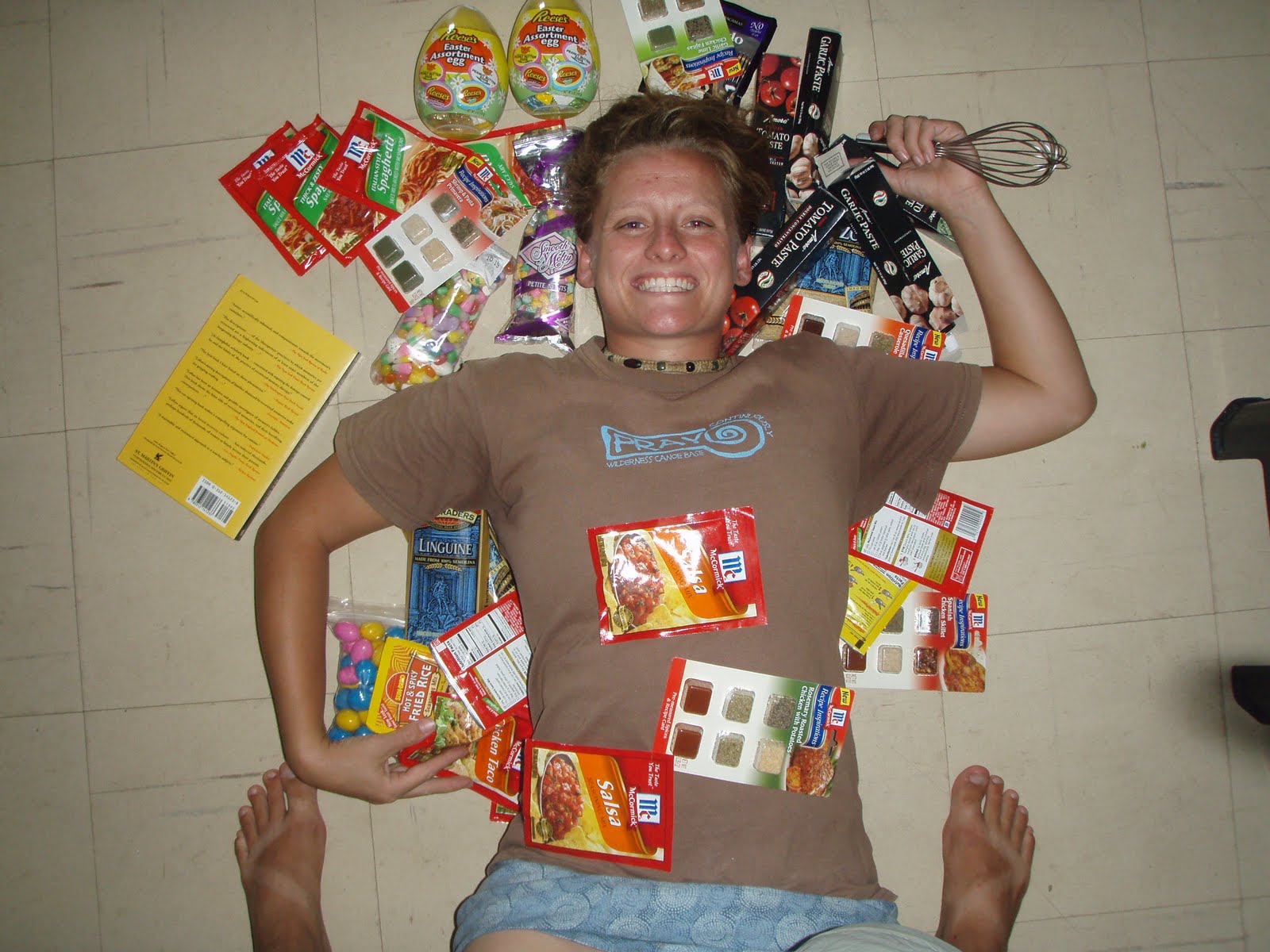
We also got an ‘Easter in a Box’ package from the Ross family. They sent us some great meal planning stuff. We will again eat like true Americans. The whisk works 10X better than that fork we’ve been using and we now have seasonings for the ground beef we buy. (any kind of ground beef seasoning is always useful...taco, enchilada, etc.) The candy brought us both back to when we were little opening Eater baskets. The chocolate didn’t survive very long in our house.

San Dee and Grandpa Scharmer sent us a fantastic package full of goodies. Candy….yum, tampons, eye liner, contact solution, deodorant, toothbrushes, body products, ramin and some pictures. Katie wants anyone reading to know that with the last box she should be set on tampons for now. I want to say the pictures were my favorite because we don't much get to see faces while were over here. It’s nice to see familiar smiles.

The Trebesch family sent us a cute little envelope with some goodies, pictures and art work from Charlotte. So sweet, thank you.
The Kimble Ross family also sent us a package. The picture really doesn’t do it justice; we ate a lot of the candy before this picture took place. Anyway, we got a beautiful Christmas card, some GREAT magazines, some Stuffed Pig game =) and lots and lots of candy. Thank you guys so much for thinking of us! We love you!

Tim and Miriam from Seattle sent us a box full of great gifts: lots of books, chocolate (OMG), great seasoning packets, some fun powder mixes, Bananagrams (this will be great for teaching English vocab to my students; and we like to play too), and a Burt’s Bees Wax beauty kit! Your gifts were so unique and so helpful. It was great to hear from you too. So sad we won’t be at family reunion but hope to see when we get back (June 2011).
We also got an ‘Easter in a Box’ package from the Ross family. They sent us some great meal planning stuff. We will again eat like true Americans. The whisk works 10X better than that fork we’ve been using and we now have seasonings for the ground beef we buy. (any kind of ground beef seasoning is always useful...taco, enchilada, etc.) The candy brought us both back to when we were little opening Eater baskets. The chocolate didn’t survive very long in our house.
San Dee and Grandpa Scharmer sent us a fantastic package full of goodies. Candy….yum, tampons, eye liner, contact solution, deodorant, toothbrushes, body products, ramin and some pictures. Katie wants anyone reading to know that with the last box she should be set on tampons for now. I want to say the pictures were my favorite because we don't much get to see faces while were over here. It’s nice to see familiar smiles.
The Trebesch family sent us a cute little envelope with some goodies, pictures and art work from Charlotte. So sweet, thank you.
The Kimble Ross family also sent us a package. The picture really doesn’t do it justice; we ate a lot of the candy before this picture took place. Anyway, we got a beautiful Christmas card, some GREAT magazines, some Stuffed Pig game =) and lots and lots of candy. Thank you guys so much for thinking of us! We love you!
Tim and Miriam from Seattle sent us a box full of great gifts: lots of books, chocolate (OMG), great seasoning packets, some fun powder mixes, Bananagrams (this will be great for teaching English vocab to my students; and we like to play too), and a Burt’s Bees Wax beauty kit! Your gifts were so unique and so helpful. It was great to hear from you too. So sad we won’t be at family reunion but hope to see when we get back (June 2011).
First Day As a Botswana Science Teacher
My first day went great. I picked up on the unit of light and light properties. These kids had been with out a teacher for several weeks when I asked the science head when I could help. He suggested a full load which is a 6 day rotation, teaching two Form 1 classes, one Form 2 class and one Form 3 class. My Setswana isn’t that good so I went with the one Form 3 class to start. My goal was to do experiments as much as possible and hope they picked it up. First day was me testing what they knew and I found out that they were up to speed in their notebooks but when it came to understanding they knew nothing. I gave some verbal questions and by half way through they could understand me. We did some eye diagram stuff and tried some pupil dilation exercises but nothing worked because it was so bright out and they didn’t know exactly what I wanted. Day 2 was better, more on light, colors and lenses. We ended the class by going outside to burn holes in paper with the magnifying lens. The unfortunate few clouds made it difficult but we ended up getting a few burn holes. It was fun and I could tell they were excited to be outside. I had given them 6 questions for homework over the weekend and Monday. Tuesday came for class number 3 and before I reached my classroom I was stopped by the science department head. He called me to him to tell me, and introduce me to the new science teacher who would be taking the full load of the classes back. It made me so sad to see all my ideas coming to a halt. I told the guy I could finish the light unit and he could start on Friday with the heat energy unit. I introduced him to my class and he went back to the staff room to relax.

My last day, what could I do? I started by asking them to hand up the homework. 3 of 35 students did the homework. (I should have given them candy :) So we went into camera parts, periscope, binoculars and optical viewing tools. Then we got out the microscopes to see who light and lenses and magnification helps us see small things.
Once I learned that the mirror light source and the limited amount of microscopes wasn’t working I had them put them back and be quiet as a prepared the ball toss quiz game. A little thing I picked up when I was teaching in Boone. A paper ball, a bucket, and 3 lines on the floor for the # or points. A correct answer got a chance to shoot. Simple questions and the use of the book gave almost everyone a shot. The bell rang and I offered 1 sweet (candy) to the winning team. Mistake, it was a free for all. Team 1 and 2 both lined up and some started grabing at my small Ziploc of candy. I had to pick and choose who I though was on the winning team. Lesson learned, won’t do it like that again.
My last day, what could I do? I started by asking them to hand up the homework. 3 of 35 students did the homework. (I should have given them candy :) So we went into camera parts, periscope, binoculars and optical viewing tools. Then we got out the microscopes to see who light and lenses and magnification helps us see small things.
Once I learned that the mirror light source and the limited amount of microscopes wasn’t working I had them put them back and be quiet as a prepared the ball toss quiz game. A little thing I picked up when I was teaching in Boone. A paper ball, a bucket, and 3 lines on the floor for the # or points. A correct answer got a chance to shoot. Simple questions and the use of the book gave almost everyone a shot. The bell rang and I offered 1 sweet (candy) to the winning team. Mistake, it was a free for all. Team 1 and 2 both lined up and some started grabing at my small Ziploc of candy. I had to pick and choose who I though was on the winning team. Lesson learned, won’t do it like that again.
Tuesday, March 2, 2010
I Can't Believe That Happened
These are stories that have happened during our service thus far that we thought you would enjoy:
When we first moved to Salajwe, we experienced our water turning off frequently. Although our host family’s house did not have running, we were still getting used to cooking without it. One night as I was making soup in the dark (our kitchen was without a light), I was using a cup of water to add to the mix. Things were going well but the soup had a very sweet smell. Once dinner was ready, Lucas noticed that the cup of water I was using was empty. He exclaimed, “You didn’t use that to cook with, did you?” It turns out the cup of water was soapy water so that we could wash our hands in the sink. Needless to say we ate plain rice that night.
One early morning I walked to the general dealer for some eggs. It turns out the dealer doesn’t open until 10am, so I walked home empty-handed. I watched some girls up ahead of me brushing their teeth by a bush. As I got closer, I realized they had no tooth brushes; they were using branches from the tree to brush their teeth.
When I first came to Salajwe Clinic, I would observe the women weighing their babies. The babies were placed in a bag with long straps that reminded me of a purse with holes cut out of the bottom for legs. The straps were hung on a scale to weight the baby. In Salajwe I’ve noticed many babies and children wearing hand-me-down clothes that are torn, too big, or too small. I am surprised to see a good number of semi-formal clothes. But I suppose if it is only worn once, it can be purchased cheap and used again and again. Sometimes babies are brought in to weigh wearing Easter and Christmas dresses. When they are placed in the bag, the ruffles from the dress would be pushed straight up so that all you could see was an African baby face surrounded by sparkly fluff.
Every morning at the clinic, we have a prayer. Most times I am unsure of what we’re praying for because it is in Setswana. Everyone takes turns praying for us. For whatever reason, I always feel put on the spot when I’m asked to pray. I think it’s because I pray very different from them. One rainy morning when I was asked to pray, I had everyone stand up, hold hands, and sang Johnny Appleseed ( Oh the Lord is good to me, and so I thank the Lord/For giving me the things I need/The sun and the rain and the appleseed/The Lord is good to me/Amen Amen Amen)
They LOVED it
I am very lucky to have Lucas. Even before we were married, he has offered to pluck my eye brows for me. One weekend, Lucas offered to pluck them as I was sitting out on our porch. At the time we had an unusual number of kids visiting us. As soon as Lucas started plucking, the kids were fascinated. After just a few hairs, Lucas admitted that he wanted to teach them how to do it. I reluctantly agreed. The first one to step up to the plate was a young boy about 9 or 10. Lucas showed him how to hold the tweezers and which hair to pluck. The boy was great. He had such a fear of hurting me, he would pluck so slowly. As soon as the hair was out, he would grab the hair out of the tweezers and study it. It wasn’t until Lucas decided to leave that I got nervous. They had no sense of shaping so just plucked whichever hair they wanted. But it was a fun experience nonetheless.
As you have read, we have a lot of student visitors. Many of them are boarders, that is they are from far away villages and stay at the school all year. For that reason many of them are tempted to ask for food. We try and set a clear boundary that our gate is always open to everyone but that we are unable to feed all of our visitors. During one visit, three girls were being particularly pushy about getting food. One girl tried to convince me that her 11-year-old friend was with child and the baby was hungry. As I was explaining that I could not feed them, one girl tried to show me how to feed a baby by putting her mouth over my nipple. It was funny and embarrassing at the same time.
A common means of transportation is Botswana is a type of van called a khombi. Khombis are most common on routes that are not used by buses or as a cheaper means of getting around larger towns than taxis. Because the more people on a khombi, the more money the driver gets, khombi rides are typically over crowded. On hot days, they are particularly miserable. Lucas and I were traveling around Gaborone via khombi and enjoying some grapes in the very back seat. I asked Lucas to lean back so that I could spit some grape seeds out the window. Instead the seeds bounced off the inside of the khombi and hit the lady in front us in the face. She was a good sport about it but I felt terrible!
The last 60 km before my village is dirt road and without public transportation. The majority of Salajwe is without a vehicle so we depend on hitch hiking to get to and from home. One trip hitch hiking back to Salajwe found me jammed between a rather large woman, and the driver. The woman took my backpack in her lap so that the driver could shift (I was basically straddling the stick shift). Not long down the road, I could feel my water bottle dripping water down my leg. I went to tighten the lid but found it wasn’t open. I worried maybe the cranberry juice in my bag had leaked all over so I tasted the liquid on my leg. I don’t know what I was thinking. I knew right away it wasn’t juice. It was warm and sour. The lady squeezed next to me was sweating down my leg and I just put it in my mouth! I still had more than half my trip to Salajwe. Every time I caught a whiff of the woman’s body odor, I could taste her sweat in my mouth again. I couldn’t wait to get home and wash my mouth out.
When we first moved to Salajwe, we experienced our water turning off frequently. Although our host family’s house did not have running, we were still getting used to cooking without it. One night as I was making soup in the dark (our kitchen was without a light), I was using a cup of water to add to the mix. Things were going well but the soup had a very sweet smell. Once dinner was ready, Lucas noticed that the cup of water I was using was empty. He exclaimed, “You didn’t use that to cook with, did you?” It turns out the cup of water was soapy water so that we could wash our hands in the sink. Needless to say we ate plain rice that night.
One early morning I walked to the general dealer for some eggs. It turns out the dealer doesn’t open until 10am, so I walked home empty-handed. I watched some girls up ahead of me brushing their teeth by a bush. As I got closer, I realized they had no tooth brushes; they were using branches from the tree to brush their teeth.
When I first came to Salajwe Clinic, I would observe the women weighing their babies. The babies were placed in a bag with long straps that reminded me of a purse with holes cut out of the bottom for legs. The straps were hung on a scale to weight the baby. In Salajwe I’ve noticed many babies and children wearing hand-me-down clothes that are torn, too big, or too small. I am surprised to see a good number of semi-formal clothes. But I suppose if it is only worn once, it can be purchased cheap and used again and again. Sometimes babies are brought in to weigh wearing Easter and Christmas dresses. When they are placed in the bag, the ruffles from the dress would be pushed straight up so that all you could see was an African baby face surrounded by sparkly fluff.
Every morning at the clinic, we have a prayer. Most times I am unsure of what we’re praying for because it is in Setswana. Everyone takes turns praying for us. For whatever reason, I always feel put on the spot when I’m asked to pray. I think it’s because I pray very different from them. One rainy morning when I was asked to pray, I had everyone stand up, hold hands, and sang Johnny Appleseed ( Oh the Lord is good to me, and so I thank the Lord/For giving me the things I need/The sun and the rain and the appleseed/The Lord is good to me/Amen Amen Amen)
They LOVED it
I am very lucky to have Lucas. Even before we were married, he has offered to pluck my eye brows for me. One weekend, Lucas offered to pluck them as I was sitting out on our porch. At the time we had an unusual number of kids visiting us. As soon as Lucas started plucking, the kids were fascinated. After just a few hairs, Lucas admitted that he wanted to teach them how to do it. I reluctantly agreed. The first one to step up to the plate was a young boy about 9 or 10. Lucas showed him how to hold the tweezers and which hair to pluck. The boy was great. He had such a fear of hurting me, he would pluck so slowly. As soon as the hair was out, he would grab the hair out of the tweezers and study it. It wasn’t until Lucas decided to leave that I got nervous. They had no sense of shaping so just plucked whichever hair they wanted. But it was a fun experience nonetheless.
As you have read, we have a lot of student visitors. Many of them are boarders, that is they are from far away villages and stay at the school all year. For that reason many of them are tempted to ask for food. We try and set a clear boundary that our gate is always open to everyone but that we are unable to feed all of our visitors. During one visit, three girls were being particularly pushy about getting food. One girl tried to convince me that her 11-year-old friend was with child and the baby was hungry. As I was explaining that I could not feed them, one girl tried to show me how to feed a baby by putting her mouth over my nipple. It was funny and embarrassing at the same time.
A common means of transportation is Botswana is a type of van called a khombi. Khombis are most common on routes that are not used by buses or as a cheaper means of getting around larger towns than taxis. Because the more people on a khombi, the more money the driver gets, khombi rides are typically over crowded. On hot days, they are particularly miserable. Lucas and I were traveling around Gaborone via khombi and enjoying some grapes in the very back seat. I asked Lucas to lean back so that I could spit some grape seeds out the window. Instead the seeds bounced off the inside of the khombi and hit the lady in front us in the face. She was a good sport about it but I felt terrible!
The last 60 km before my village is dirt road and without public transportation. The majority of Salajwe is without a vehicle so we depend on hitch hiking to get to and from home. One trip hitch hiking back to Salajwe found me jammed between a rather large woman, and the driver. The woman took my backpack in her lap so that the driver could shift (I was basically straddling the stick shift). Not long down the road, I could feel my water bottle dripping water down my leg. I went to tighten the lid but found it wasn’t open. I worried maybe the cranberry juice in my bag had leaked all over so I tasted the liquid on my leg. I don’t know what I was thinking. I knew right away it wasn’t juice. It was warm and sour. The lady squeezed next to me was sweating down my leg and I just put it in my mouth! I still had more than half my trip to Salajwe. Every time I caught a whiff of the woman’s body odor, I could taste her sweat in my mouth again. I couldn’t wait to get home and wash my mouth out.
Subscribe to:
Posts (Atom)